Neutral
You will never reach your destination if you stop and throw stones at every dog that barks.

-Winston Churchill

There’s a concept of neutral in games. It’s the state of the game where no major actions happen.
In fighting games, neutral is when opponents are on opposite sides and not attacking each other.
In StarCraft, neutral means neither player should attack the other. There are specific timings where it makes sense to attack when you get a power spike, whether from an upgrade or production peak. But the majority of the game is spent in neutral.
While in neutral, there are other things to do and think about. But it’s not the heat of the action.
Neutral in Life
If you’re doing a deal, neutral is after you had your meetings, did your backchannels, and sent follow-up messages. After you do all the actions, there isn’t much more to do to help push the deal forward.
This is neutral.
You can maybe nudge, but the pitch is over. It’s a game of hot potato when it’s on you, but it’s not on you. You wait.
In the old world of software development, programmers needed to wait while their code compiled. While code compiled, they were in neutral.
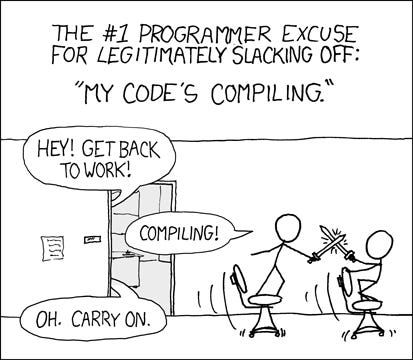
Programmers recently found themselves in neutral with the introduction of coding agents. They put in the prompts, then an agent wrote code. The programmer waited. They were in neutral while the agent worked on a task. There was even a company that put games in the IDE for programmers to play while they waited for their agent to do work. A self-described Brainrot IDE.
Optimizing Neutral
Now, we have agentic swarms. Programmers have more than one task on their list, so they can have multiple agents working simultaneously. This allows for building more than ever before. No time for a Brainrot IDE.
The biggest mistake people make is wasting time in neutral. Overthinking what is already done. Do something instead.
There’s value in contemplating what to do next, but action is better. If you spend the majority of your time in neutral, you aren’t doing much. Actions beget more actions. Prolific people are prolific because they do something else while their work is in neutral.
Conclusion
Neutral is a part of life.
Neutral in work and personal life takes up mental bandwidth. The rookie mistake is to sit and contemplate all day while in neutral. It’s better while in neutral to focus on the next task at hand.
When in neutral, shift your attention elsewhere. The added benefit is that when the task comes back, you’re seeing it again with fresh eyes. Neutral is the enemy of efficiency.